
Different Perspectives, One Sky: UI GreenMetric Brings Universities and Media Together to Discuss Clean Air
2 October 2026
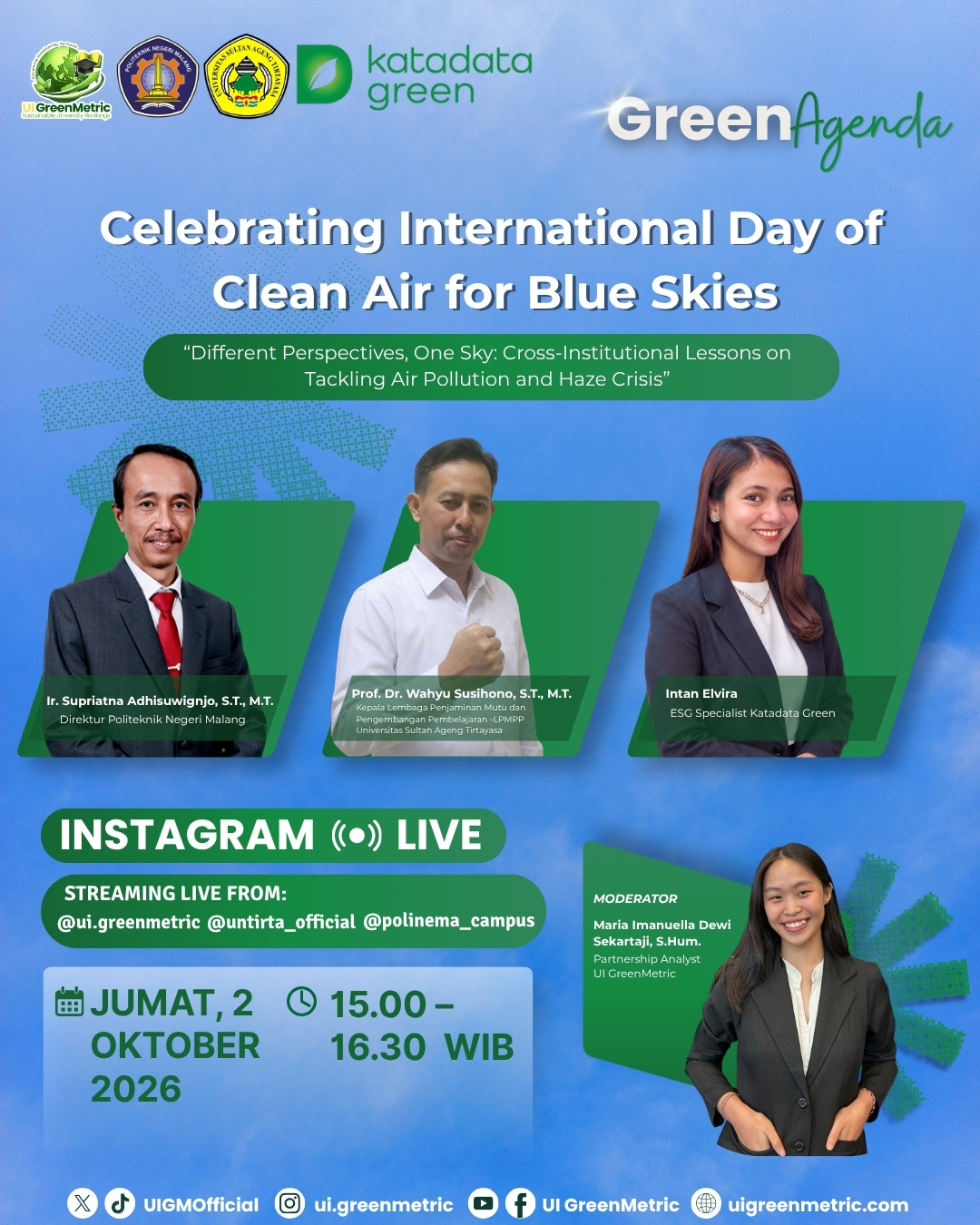
JAKARTA, INDONESIA – Air pollution does not stop at the boundaries of a campus, a city or even a country. Tackling it requires different institutions to look at the problem from different angles—and to work together. That was the idea behind the UI GreenMetric Instagram Live Discussion 2026, held on 2 October 2026 to mark the International Day of Clean Air for Blue Skies.
Titled “Different Perspectives, One Sky: Cross-Institutional Lessons on Tackling Air Pollution and Haze Crisis,” the discussion brought together representatives from Universitas Sultan Ageng Tirtayasa (UNTIRTA), Politeknik Negeri Malang (POLINEMA), and Katadata Green. The three institutions brought different experiences to the conversation, from university management and applied research to data-driven journalism and public communication.
The discussion comes as air pollution remains a major environmental and public-health challenge. In Southeast Asia, the problem can become more complicated when forest and land fires create transboundary haze, with impacts that can extend from Indonesia to neighbouring countries. The discussion also highlighted the connection between air pollution, ecosystem sustainability, climate change and everyday life.
For universities, the challenge is both external and internal. Campuses consume energy, generate waste, operate transportation systems and run laboratories and other activities that can contribute to emissions. At the same time, universities can use their campuses as living laboratories to test cleaner technologies, sustainable transport, energy efficiency, green infrastructure and environmental policies.
The discussion explored how these responsibilities can translate into action. Prof. Dr. Wahyu Susihono, S.T., M.T., Head of the Institute for Quality Assurance and Learning Development (LPMPP) at Universitas Sultan Ageng Tirtayasa, was invited to share UNTIRTA’s perspective on the relationship between industrial activity and air quality around the campus, as well as programmes and efforts undertaken by the university.
For Ir. Supriatna Adhisuwignjo, S.T., M.T., Director of Politeknik Negeri Malang, the discussion focused on a different but complementary role: the contribution of vocational education, applied research and innovation to developing practical solutions for air pollution. The session explored how applied research can translate knowledge into solutions that respond directly to environmental challenges.
Intan Elvira,ESG Specialist at Katadata Green, brought the perspective of media and data-driven environmental advocacy. The discussion examined how data on air pollution and forest and land fires can be mapped and communicated, and how media organisations can use evidence-based narratives to improve public awareness and contribute to public-policy discussions.
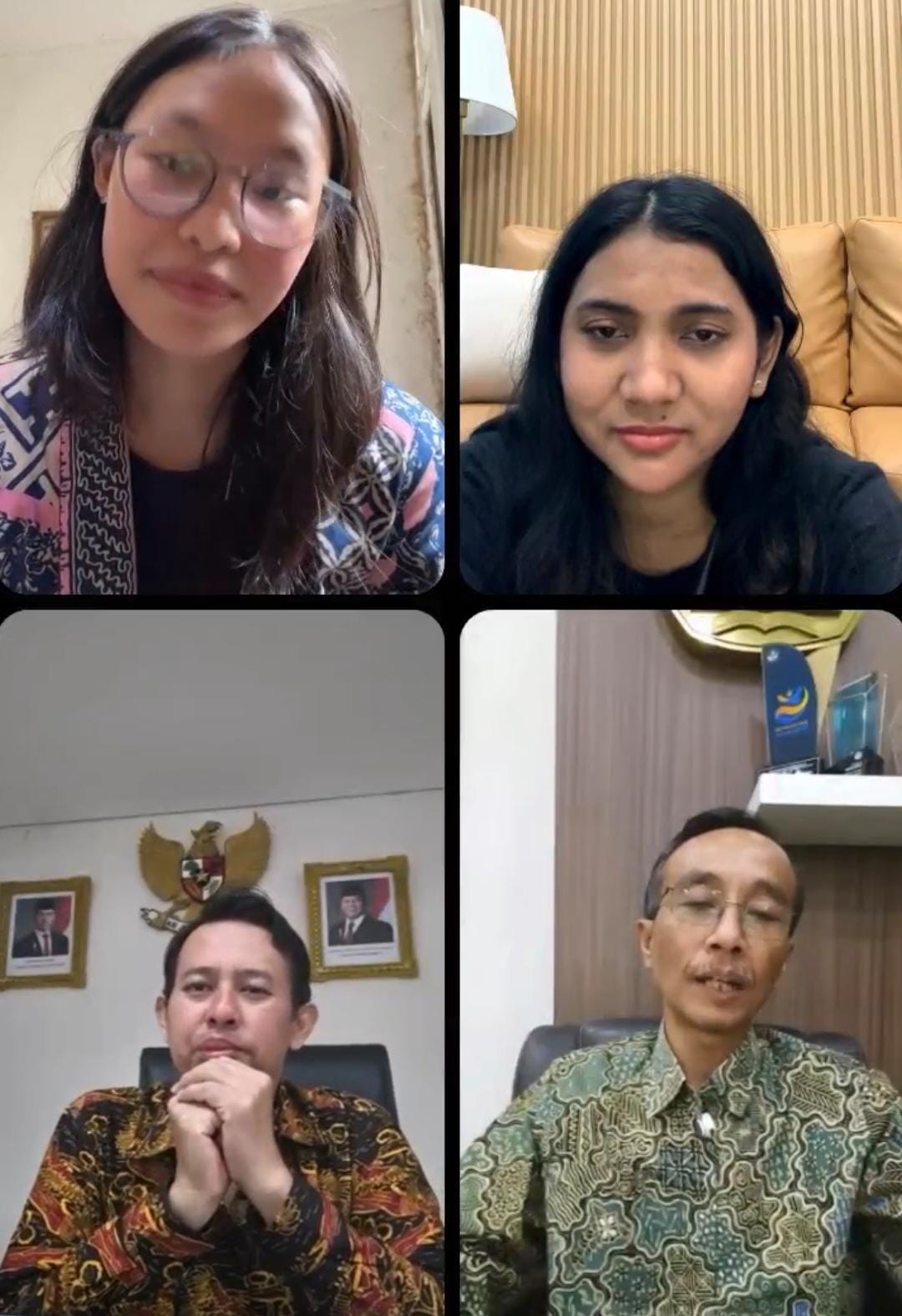
One of the central themes was that no single institution can address the air-pollution problem on its own. The workshop explored the need for collaboration across disciplines and sectors to connect academic research with public policy and communicate environmental issues to wider audiences.
This is particularly important when dealing with the haze crisis caused by forest and land fires. Local sources of pollution can create impacts far beyond their point of origin, making cooperation between researchers, universities, government, media and other stakeholders essential. The discussion therefore looked not only at how institutions can reduce their own environmental impact, but also at how they can contribute to broader solutions.
The speakers also discussed the challenges institutions face when implementing air-pollution prevention and control measures. Rather than presenting a single solution, the session encouraged participants to learn from different institutional contexts and identify approaches that can be adapted to local needs.
That emphasis on cross-learning is central to the UI GreenMetric approach. Universities operate in different environments and face different constraints, but sharing practical experiences can help institutions identify solutions that have already been tested elsewhere and adapt them to their own circumstances.
The discussion concluded with a broader question: where should collaboration begin if it is to create meaningful impact? Bringing research, education, institutional action, data and public communication together offers one possible answer. It allows environmental knowledge to move beyond academic publications and become part of everyday decision-making and public awareness.
The UI GreenMetric Instagram Live Discussion 2026 demonstrated that the clean-air challenge needs more than technical solutions. It requires institutions to listen to one another, share evidence and turn different perspectives into collective action.
Different institutions may see the problem differently. But the air they share is the same.
Written by Iskandar Hamonangan – Communications Coordinator at UI GreenMetric.