
UI GreenMetric and Universitas Negeri Manado Explore Digital Innovation for Smart and Green Campuses
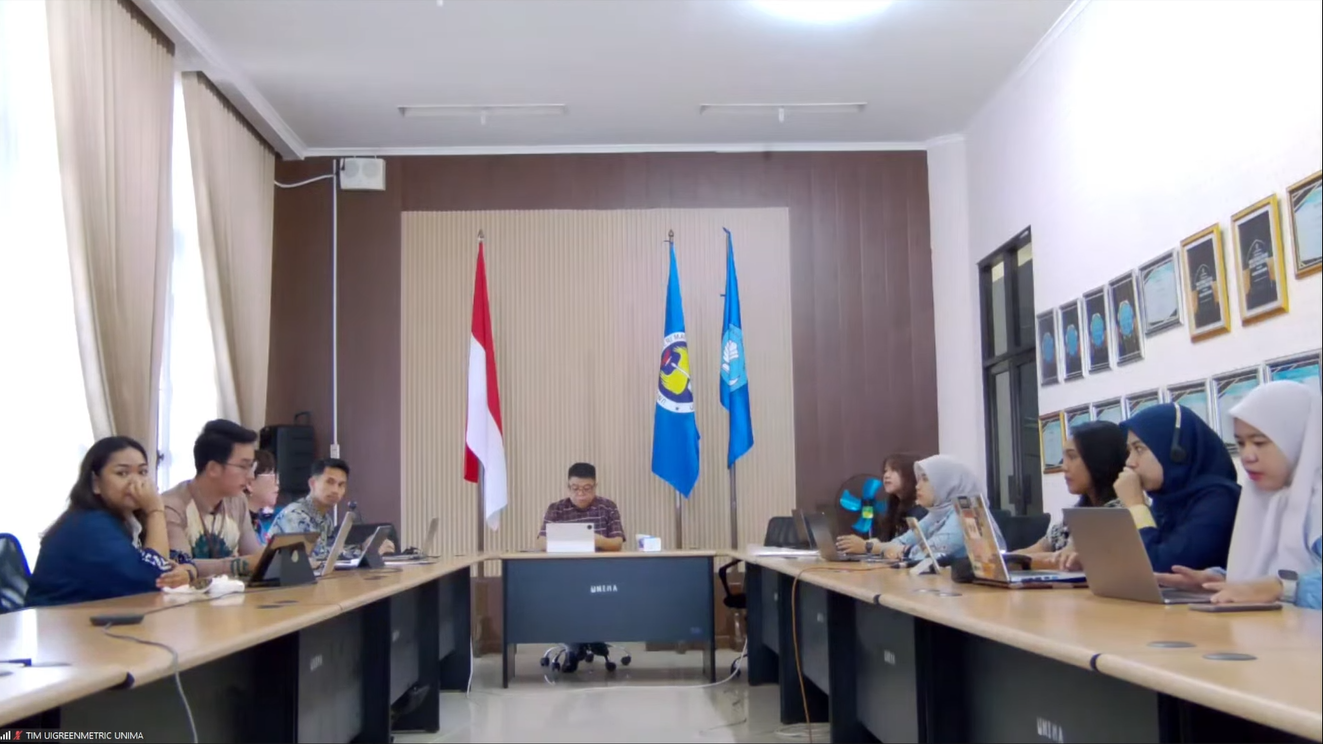
TONDANO, INDONESIA – How can universities use digital innovation to accelerate sustainability and move towards net zero emissions? This question was at the centre of the Smart & Green Campus: Towards Net Zero Emission through Digital Innovation webinar, organised by Universitas Negeri Manado (UNIMA) in collaboration with UI GreenMetric on Friday, 16 October 2026.
Held online, the webinar brought together university leaders, academics, students and other participants to discuss how digital technology, effective governance and community engagement can support more sustainable campus management.
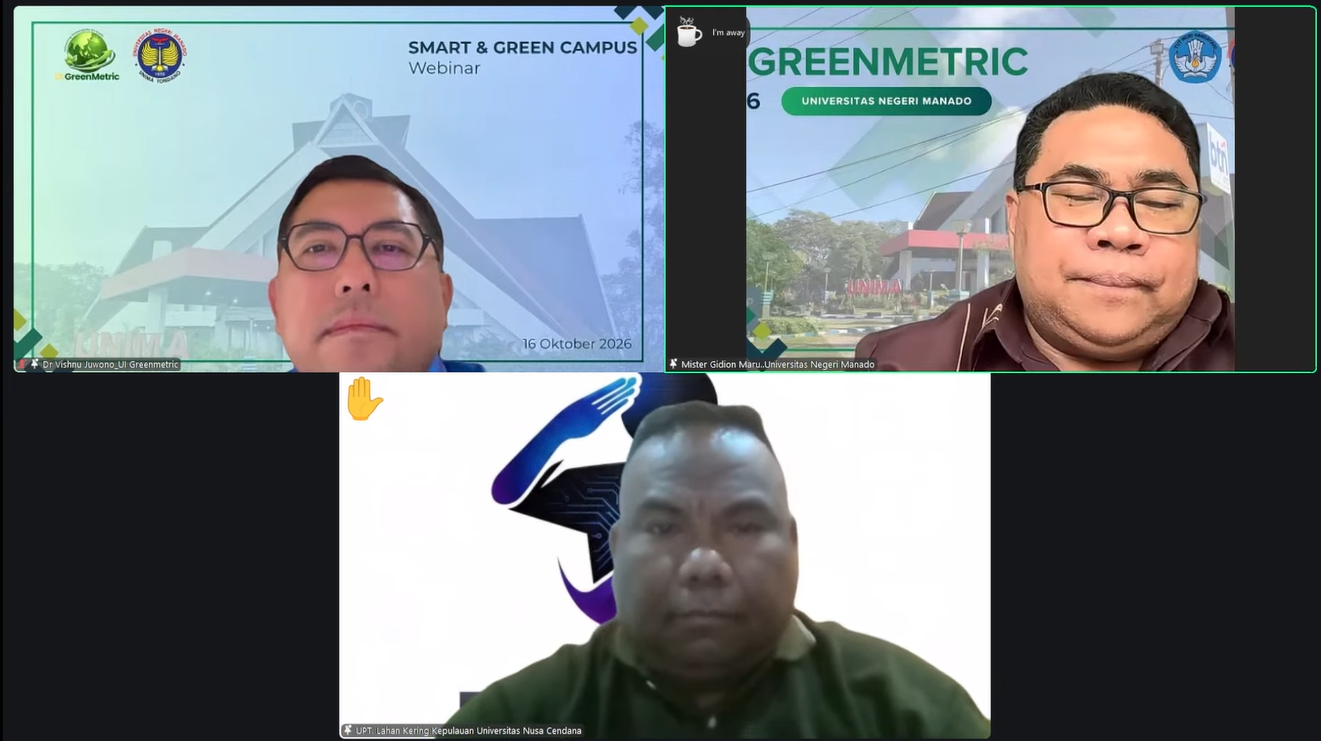
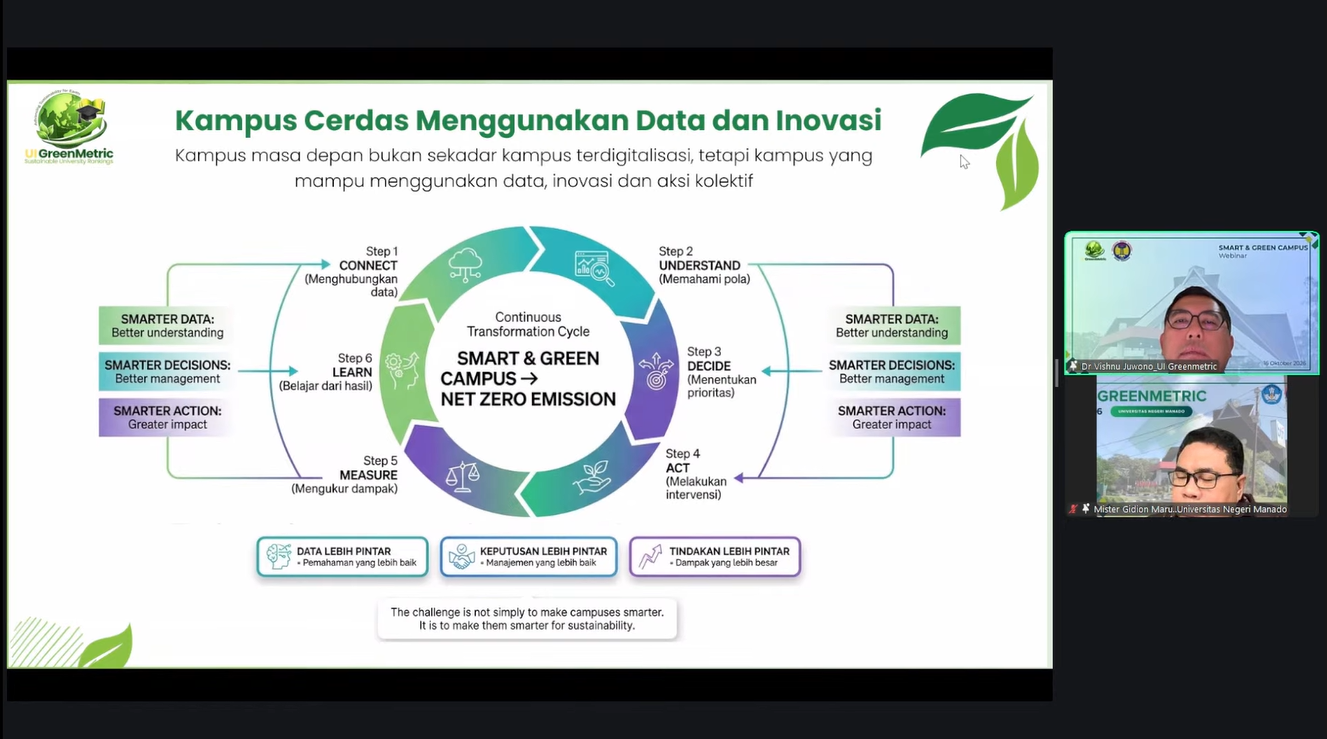
Dr. Vishnu Juwono, Chairman of UI GreenMetric, delivered a presentation titled Community Engagement and University Governance Based on the Sustainable Development Goals (SDGs) through Digitalisation. He highlighted the importance of connecting sustainability measurement with institutional decision-making and practical improvements across university operations.
Dr. Vishnu explained that UI GreenMetric, initiated by Universitas Indonesia in 2010, provides a framework for universities to assess their sustainability policies and programmes, identify areas for improvement, and learn from institutions around the world. Its methodology covers seven categories: Setting and Infrastructure; Energy and Climate Change; Waste; Water; Transportation; Education and Research; and Governance and Digitalisation.
Beyond measuring performance, sustainability indicators can help universities make better-informed decisions. Energy consumption data, for example, can support more efficient building operations, while waste management data can inform procurement practices and encourage more responsible consumption. To be effective, however, such information must be reliable, regularly updated and used to guide action.
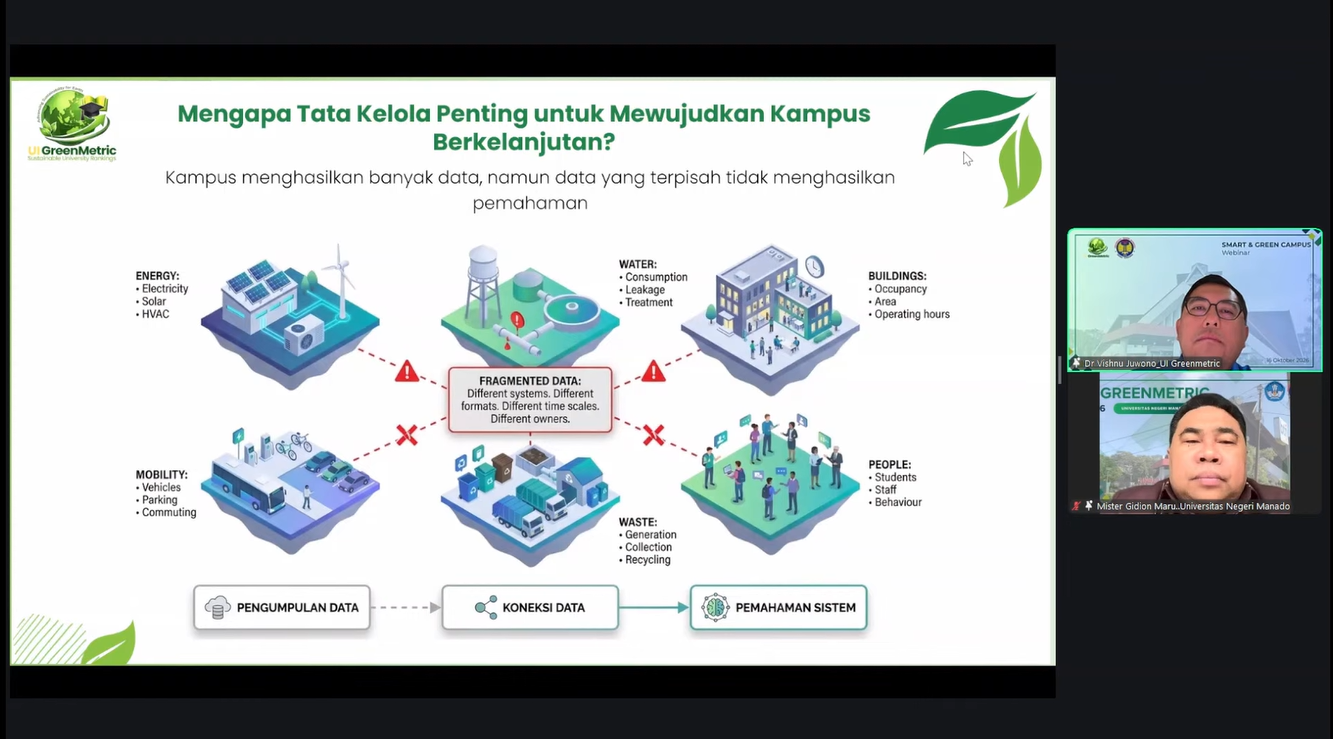
A key message of the presentation was that. Digital dashboards, connected sensors, data analysis and artificial intelligence can help identify patterns and potential inefficiencies. Their value ultimately depends on clear responsibilities, sound data governance and the ability to translate findings into meaningful action.
Dr. Vishnu also emphasised that campus sustainability requires collaboration across institutional boundaries. University leaders provide direction and resources, operational teams implement and monitor programmes, and students, lecturers and administrative staff contribute their knowledge and participation. Engaging the campus community from the early stages of programme development helps ensure that sustainability initiatives respond to real needs and can be maintained over time.
The presentation further outlined a practical cycle for continuous improvement: connecting data, understanding patterns, setting priorities, taking action, measuring results and learning from the outcomes. This approach enables universities to evaluate their initiatives, refine their strategies and integrate sustainability into long-term institutional planning. He also noted that progress towards net zero emissions requires consistent emissions calculations and measurable evidence, rather than relying solely on the adoption of new technologies or improvements in sustainability scores.
The webinar also featured contributions from Dr. Armstrong Sompotan, Head of the Institute for Research and Community Service at UNIMA, who discussed the role of the SDGs in the university’s research and community engagement. Prof. Dr. Orbanus Naharia also delivered a presentation on the SDGs in research and community service, reinforcing the importance of connecting academic activities with sustainability goals. The sessions were followed by interactive discussions and question-and-answer sessions with participants.
Through this collaboration, UI GreenMetric and UNIMA highlighted the importance of integrating digital innovation, institutional governance, education, research and community participation into campus sustainability efforts. The discussion underscored that meaningful progress depends not only on technology, but also on reliable data, collective action and a commitment to continuous improvement.
Building a smart and green campus is a gradual process. By combining digital solutions with responsible governance and active community engagement, universities can strengthen their sustainability practices and contribute to a more sustainable future.
Together, Advancing Sustainability for Earth.
Written by Iskandar Hamonangan – Communications Coordinator, UI GreenMetric