
Recycling at Universitas Indonesia: A Guide to Responsible Waste Disposal on Campus
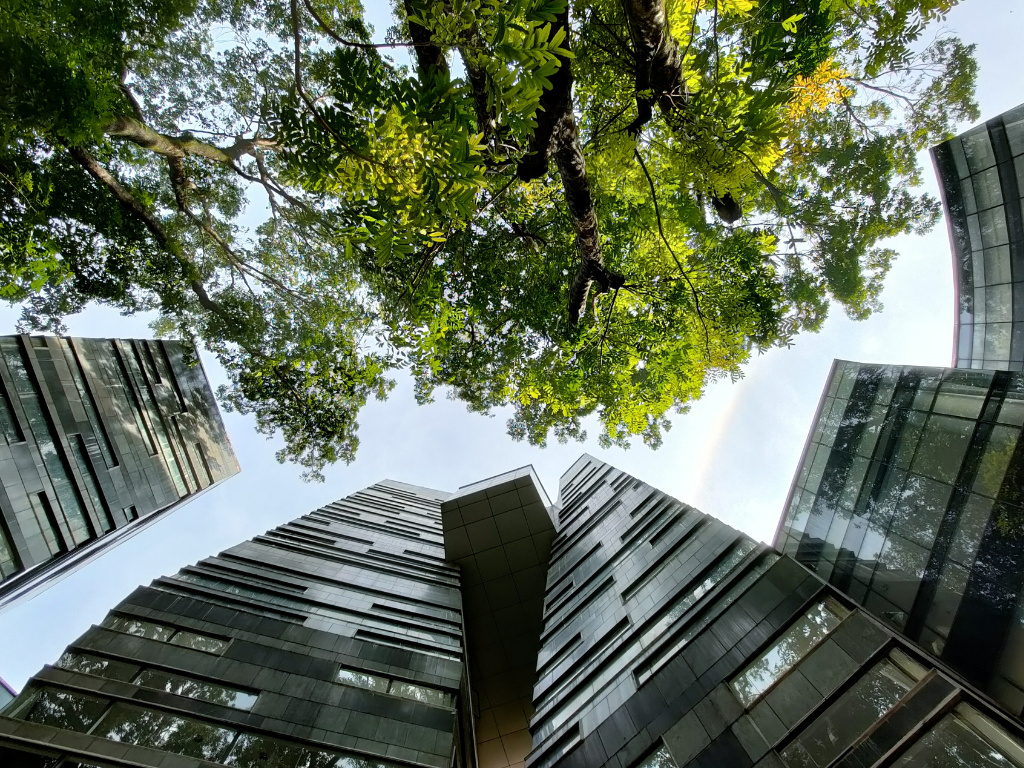
Universitas Indonesia has long positioned sustainability as an important component of its campus identity. From the preservation of its extensive green areas to the promotion of environmentally responsible practices among students and staff, the university continues to encourage a culture that supports long-term environmental stewardship. However, one everyday challenge remains visible across many parts of the campus: waste disposal.
Across the university grounds, many waste bins still take the form of standard grey containers where various types of waste are often disposed of together. Plastic bottles, food packaging, paper waste, and occasionally even electronic waste can end up in the same place. When different types of waste are mixed in this way, recyclable materials become more difficult to process, and items that require special treatment may pose environmental risks if not handled properly.
To address these concerns, several locations across the Universitas Indonesia campus have introduced specialized recycling facilities designed to separate specific types of waste. These stations allow members of the campus community to dispose of certain materials more responsibly while supporting the broader sustainability efforts being implemented throughout the university. Below are several recycling points currently located around the UI campus.
Faculty of Humanities (FIB): The Bee Bottle Collector:
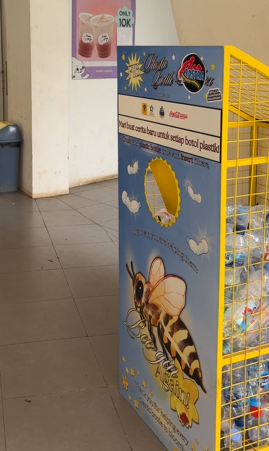
Visitors to the Faculty of Humanities (FIB) may encounter one of the campus’s most recognizable recycling installations: a large bee-shaped container designed specifically for collecting plastic bottles. This installation serves both a functional and educational role within the faculty environment.
Plastic beverage bottles represent one of the most common forms of waste generated on campus. By providing a dedicated recycling point for these items, the bee-shaped bin encourages students and visitors to separate recyclable materials from general waste. The distinctive design helps attract attention, subtly reminding the community to consider the environmental impact of daily habits. As outlined in the UI GreenMetric Sustainable University Rankings criteria, effective waste treatment and 3R (Reduce, Reuse, Recycle) programs are essential for a sustainable campus. By depositing bottles here, we ensure these materials are diverted from the residual waste stream.
Faculty of Engineering (FT): The Lion Bottle Recycling Station
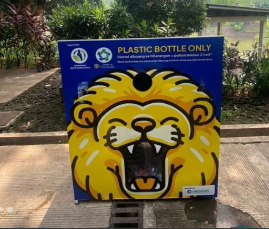
At the Faculty of Engineering (FT), recycling efforts are represented by another distinctive installation: a lion-shaped recycling bin designed to collect plastic bottles. Similar to the bee installation at FIB, this station allows plastic beverage containers to be separated from mixed waste streams.
Given the high level of activity within the engineering faculty, where thousands move through the area daily, the presence of such facilities plays an important role. In alignment with the UI Sustainability Hub’s "Ditching Disposables" initiative, these designated containers contribute to a circular economy on campus by ensuring that inorganic waste is captured for reprocessing rather than entering general trash bins.
Electronic Waste Collection Points: FISIP and FIA:
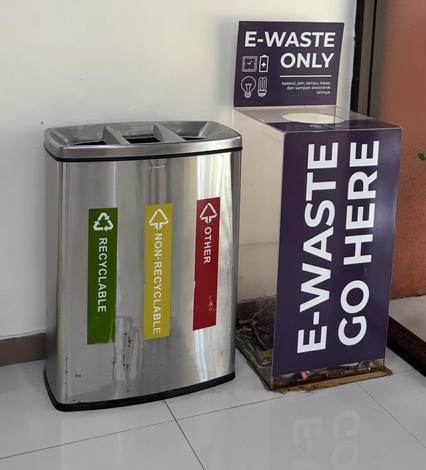
Electronic waste, or e-waste, presents a different set of environmental challenges. Items such as batteries, charging cables, earphones, and small electronic devices often contain hazardous materials, including lead, mercury, and other chemical compounds. If these materials are disposed of through regular waste streams, they can potentially contaminate soil and water systems when they reach landfill sites.
Recognizing the importance of responsible e-waste management, UI has provided dedicated collection bins in several locations. According to the Center for Sustainability and Waste Management (CSWM UI), managing toxic waste through specialized collection is essential to prevent groundwater contamination. At the Faculty of Social and Political Sciences (FISIP), designated bins are located near the faculty notice boards, while the old building of the Faculty of Administrative Sciences (FIA) hosts a specialized bin for used batteries.
Central Library (Perpusat): High-Traffic Recycling Stations:
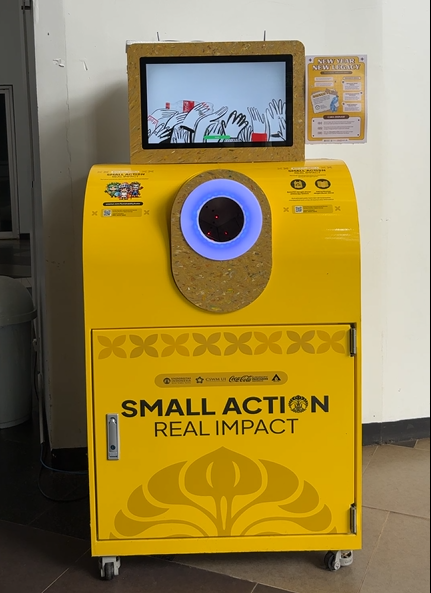
The Central Library (Perpusat) also contributes to the campus recycling ecosystem by providing dedicated bottle recycling stations. As one of the busiest academic spaces on campus, the library accommodates a high volume of plastic beverage containers daily.
Reflecting the "Waste Management" indicators monitored by the Directorate of Operations (DOPFMA UI), these stations are strategically placed to handle high-traffic recycling needs. By integrating this infrastructure into a busy study environment, the Central Library demonstrates how sustainability can be incorporated into everyday academic life.
Supporting a Sustainable Campus Culture
From the dense greenery of the UI forest to the vibrant academic life that defines its faculties, UI continues to strengthen its commitment to sustainability through both large-scale initiatives and small everyday actions. Recycling stations represent an important part of this broader environmental strategy.
As noted in the 2026 UI Waste Management System report, when recyclable materials are disposed of correctly, they can be processed and reintegrated into production cycles rather than being discarded. Plastic bottles may be transformed into new products, while electronic components can be safely dismantled so that valuable materials may be recovered. In this way, responsible waste disposal contributes not only to maintaining a cleaner campus environment but also to supporting a more sustainable system of resource use.
Small Actions, Collective Impact
Members of the Universitas Indonesia community can contribute to these sustainability efforts through simple daily habits. Choosing to deposit plastic bottles in specialized recycling bins, properly disposing of used batteries, or bringing electronic waste to designated collection points are small actions that collectively produce meaningful environmental benefits.
As sustainability continues to become a shared responsibility across campus, the presence of these recycling facilities serves as a reminder that building a greener university environment begins with individual awareness and participation. Through consistent and responsible practices, the UI community can help ensure that the campus remains not only a center of academic excellence but also a model for environmental stewardship.
Written by Muhammmad Dito Rizki Suprapto - Media Relations Intern of UI GreenMetric Edited by Riska Putri Hariyadi - Communications Coordinator of UI GreenMetric