
Nurturing the Earth, Inspiring the Mind: Four Women Weaving Kartini’s Spirit into our Green Campuses
The spirit of Kartini is no longer confined to historical remembrance; it lives on through tangible actions that touch various sectors, particularly environmental preservation. As an institution committed to global sustainability, UI GreenMetric consistently celebrates Kartini Day each year by highlighting the voices and contributions of women who serve as engines of change. This alignment reflects the organization's commitment to fostering gender equality and empowering women within the management of environmental initiatives in higher education.
This tradition of appreciation is deeply rooted in UI GreenMetric's annual agenda. As seen last year through the "Jejak Kartini Masa Kini" podcast series, UI GreenMetric invited activists and green campus advocates such as Ranitya Nurlita, Prof. Dr. Sumarmi, M.Pd., and Dr. Susi Agustina Wilujeng, S.T., M.T., to discuss female leadership in a sustainable world. This year, that momentum continues by framing the stories of other inspiring women who are leading sustainability movements and proving that equitable leadership is a cornerstone for a greener future. UI GreenMetric has observed a substantial number of women taking pivotal roles in the development of greener campuses. This year, we feature four incredible women who have contributed directly toward these implementations.
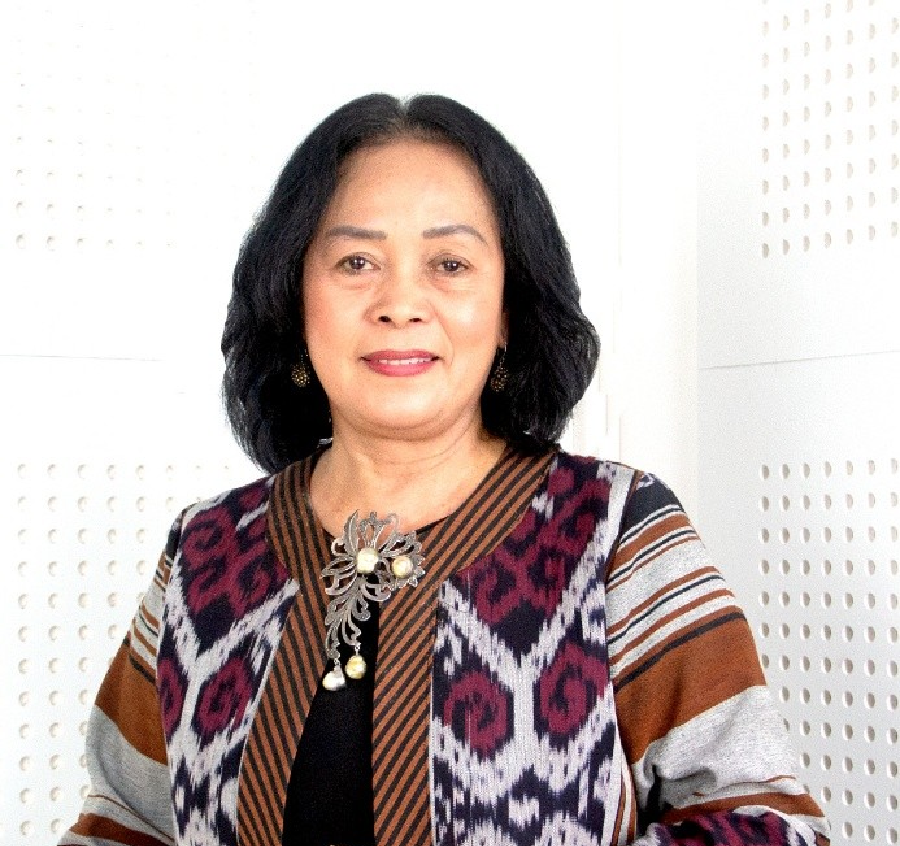
First, the sustainability transformation at Universitas Terbuka (UT), led by Prof. Dra. Dewi Artati Padmo Putri, M.A., Ph.D., illustrates how environmental initiatives can evolve into robust institutional systems. Under the "UT Green University" (UTGU) framework, she has led the development of a campus based on three primary pillars: green spatial setting, green infrastructure, and green behavior. UT has successfully dedicated over 70% of its area to green open spaces and implemented digital learning ecosystems through the ICE Institute to minimize the physical carbon footprint of traditional education. UT's commitment earned them international recognition through the 2025 Triple Awards from UI GreenMetric, ranking 34th in Indonesia, 151st in Asia, and 269th globally. While the numbers are impressive, their true meaning lies in the message they send that even without a traditional physical boundary, a 'Green University' can exist in the hearts and digital habits of its students, bridging the gap between distance education and a deeply rooted love for the planet.
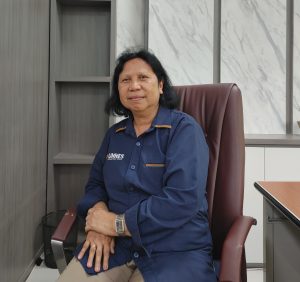
Then, at Universitas Negeri Semarang (UNNES), Prof. Dr. Ir. Nana Kariada Tri Martuti, M.Si. demonstrates her dedication as the Head of the Conservation Subdirectorate by integrating scientific expertise with environmental advocacy. Her work focuses on the vital role of plant nurseries and conservation programs in providing essential ecosystem services, ranging from water resource management to air quality improvement. UNNES strengthens this vision through the H-BAT (Hijau, Bersih, dan Sehat) program, which is fully integrated with UI GreenMetric indicators, and the development of centralized multi-story parking buildings to reduce campus pollution. Her leadership embodies the essence of a modern Kartini by promoting grassroots ecological preservation, helping UNNES achieve a 2025 ranking of 4th in Indonesia, 6th in Asia, and 28th globally. Yet, for Prof. Nana, these numbers are more than a score, they reflect a campus that has truly learned to breathe in harmony with its surroundings, proving that academic excellence and ecological soul can grow together.

Another of this year’s inspiring figures is Dr. Dessy Ariyanti, S.T., M.T., who serves as the Vice Director of Global Reputation at Universitas Diponegoro (UNDIP). She pioneered an impactful innovation in organic waste management by converting campus leaf litter into biochar through pyrolysis—a step that not only addresses waste issues but also creates economic value. Under her leadership, UNDIP has integrated advanced Information and Communication Technology (ICT) through the SIGAP application for real-time incident reporting and campus safety monitoring. The resulting biochar is used to enhance soil fertility for mangrove seedlings, serving as a nature-based solution for carbon sequestration and a model for circular waste systems. These efforts contributed to UNDIP’s prestigious 2025 UI GreenMetric ranking: 2nd in Indonesia, 4th in Asia, and 23rd in the world. However, reaching 23rd in the world represents something deeper: it is proof that a vision born in Semarang now resonates across the globe, offering a blueprint for universities everywhere to follow.
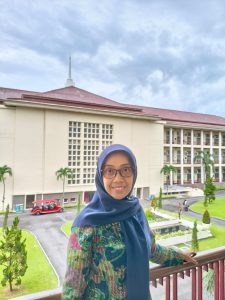
The last but not least example of significant contribution comes from Ir. Sentagi Sesotya Utami, S.T., M.Sc., Ph.D. at Universitas Gadjah Mada (UGM), who has dedicated over a decade to spearheading green building principles. She ensures that every stage of a building's lifecycle, from initial design to daily operations, aligns with environmental standards to reduce energy consumption. UGM supports this through the Sustainable Business School Framework (SBSF) and the development of a Smart Campus system that integrates eco-friendly infrastructure with digital governance. Her data-driven strategies guided the university to achieve a substantial reduction in carbon emissions, totaling 1,439 metric tons of CO₂ in a single year. These achievements placed UGM at 3rd in Indonesia, 5th in Asia, and 26th in the world in the 2025 rankings. Beyond the prestige, these rankings represent the 'light' of a decade-long journey, a quiet confirmation that every brick laid, and every sensor installed is a step toward a world that UGM’s future generations will inherit with pride.
Despite these technological and structural advancements, these leaders agree that the greatest challenge in sustainability remains human behavior. Educating the campus community to adopt eco-friendly habits, such as waste segregation and energy efficiency, requires persistence and constant role-modeling from leadership. They prove that true sustainability is not born from one-off large-scale programs, but rather from consistent, collective actions practiced daily by all members of the institution.
Through the UI GreenMetric platform, the individual dedication of these extraordinary women continues to grow into a collective movement with a global impact. This effort ensures that the spirit of Kartini remains alive, nurturing the future of our planet through the strategic roles of women in higher education. We encourage all educational institutions to continue innovating, empowering female talent, and joining UI GreenMetric in creating a more sustainable campus for future generations.
Written by Muhammmad Dito Rizki Suprapto - Media Relations Intern of UI GreenMetric
Edited by Riska Putri Hariyadi - Communications Coordinator of UI GreenMetric