
UI GreenMetric Workshop on Sustainable City Rankings Methodology Shapes the Future of Urban Measurement
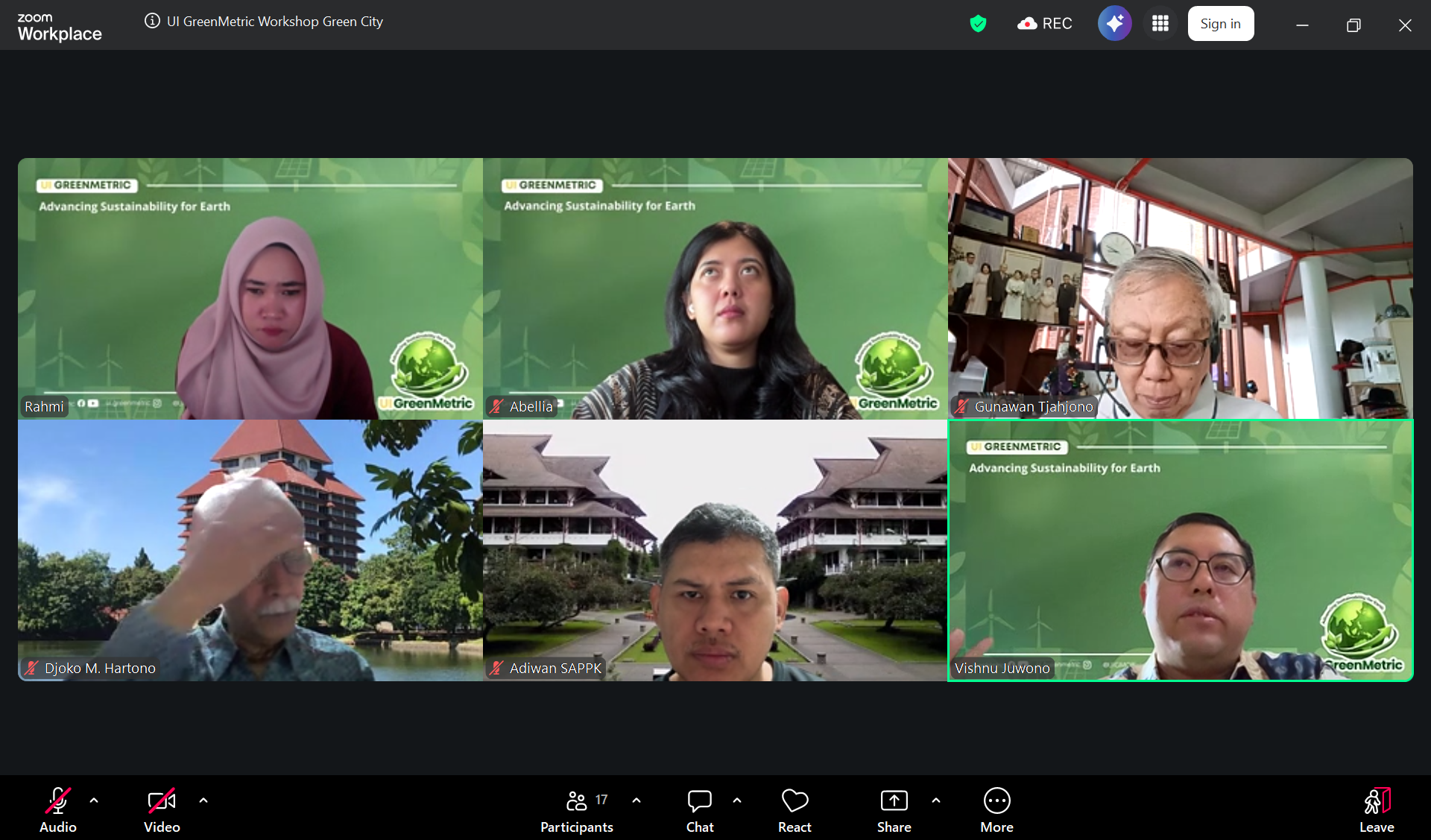
On May 8, 2026, UI GreenMetric hosted a consultative workshop aimed at refining the methodology and assessment framework for the upcoming UI GreenMetric Sustainable City Rankings 2026. Organized by UI GreenMetric, the session was led by Chairperson Vishnu Juwono, S.E., M.I.A., Ph.D., Vice-Chairperson Dr. Abellia Anggi Wardani, S.Hum., M.A., Manager of Operations, Data, and Service Development Rahmi, S.Hum., M.Sc., Ph.D. and Dr. Jauzak Hussaini W., S.Kom., M.T., Data & Research Coordinator.
During the opening, Vishnu Juwono, S.E., M.I.A., Ph.D., emphasised that UI GreenMetric has prepared a robust and improved modality for the 2026 rankings, designed to offer a better framework for assessing regencies and cities compared to previous years. Under the coordination of Rahmi, S.Hum., M.Sc., Ph.D., the team presented a strategic transformation from "UI GreenCityMetric" into a more comprehensive "sustainable city" approach. The new concept will include 6 categories that will have a combined score of 10,000; this new methodology aims to transform the measurement system from merely green cities into a more comprehensive system for sustainable municipalities and regencies. This workshop served as a vital medium for refinement, providing a collaborative space for a distinguished panel of reviewers, comprising professors and academics from various scientific disciplines, to offer holistic inputs before the finalization of the 2026 guidelines. The workshop revolved around actionable feedback from the panel, which included Prof. Dr. Ir. Riri Fitri Sari, M.Sc., M.M., Dr. Junaidi, M.A., Prof. Dr. Ir. Djoko M. Hartono, S.E., M.Eng., Dr.-Ing. Ova Candra Dewi, S.T., M.Sc., Prof. Ir. Antony Sihombing, MPD., Ph.D., Prof. Ir. Gunawan Tjahjono, M.Arch., Ph.D., Prof. Dr. Ir. Muhamad Asvial, M.Eng., Prof. Dr. Raldi Hendro T. Koestoer, M.Sc., APU, Dr. Poeti Nazura Gulfira Akbar, S.T., M.Sc., and Dr. Adiwan Fahlian Aritenang. A central theme was the shift from a purely physical "green city" concept to a holistic understanding of urban sustainability. As Dr. Junaidi, M.A. highlighted, this evolution is critical for capturing the complexity of modern cities and helping them understand their direction for improvement. The newly proposed methodology features a total score of 10,000 points, encompassing 41 scored indicators across six primary categories: Setting and Infrastructure, Energy and Climate Change, Waste, Water, Transportation, and Governance. A major point of consensus was the necessity of fair comparisons across different regions. Prof. Ir. Gunawan Tjahjono, M.Arch., Ph.D. and Prof. Dr. Ir. Djoko M. Hartono, S.E., M.Eng. highlighted that metropolitan hubs like Jakarta cannot be evaluated using the same lens as rural regencies. To address this, the reviewers advocated for regional typologies, ensuring that coastal, mountainous, and tourist zones are assessed contextually. Dr. Poeti Nazura Gulfira Akbar, S.T., M.Sc., further suggested data normalizations to prevent skewed scoring between cities and regencies. The panel also pushed for a more functional approach to environmental metrics. Prof. Dr. Ir. Muhamad Asvial, M.Eng., pointed out that green spaces must be evaluated on their capacity to mitigate floods. Similarly, Prof. Ir. Gunawan Tjahjono, M.Arch., Ph.D., proposed expanding the "3R" waste model into a "4R" framework by adding "Regulate". Prof. Dr. Ir. Djoko M. Hartono, S.E., M.Eng. also stressed the importance of differentiating between solid waste and liquid wastewater systems. As the methodology becomes more data-intensive, Prof. Dr. Ir. Riri Fitri Sari, M.Sc., M.M. and Dr. Junaidi, M.A., warned against an overreliance on AI, stressed strict "data lineage" protocols to track the source and validity of information. To complement this, Dr. Adiwan Fahlian Aritenang advocated for spatial validation tools like remote sensing and OpenStreetMap (OSM) to verify local conditions. Ultimately, the workshop underscored the need to align these rankings with local government planning like the Rencana Pembangunan Jangka Menengah Daerah (RPJMD), as well as national frameworks from Bappenas and the Ministry of Environment and Forestry. By synchronizing indicators with the SDGs 2030 and Golden Indonesia 2045 vision, UI GreenMetric aims to provide a transformative diagnostic tool for systemic sustainability.The 2026 UI GreenMetric Sustainable City Rankings will open soon. Stay tuned to our social media channels and official website to stay in the loop of our activities and ensure your city or regency is part of this global sustainability movement.
Written by Muhammmad Dito Rizki Suprapto - Media Relations Intern of UI GreenMetric